
CRPF Officer
Explore a comprehensive guide on becoming a CRPF Officer. Discover career opportunities, qualifications, exams, salary, roles, and future prospects in this rewarding field.
Career Option
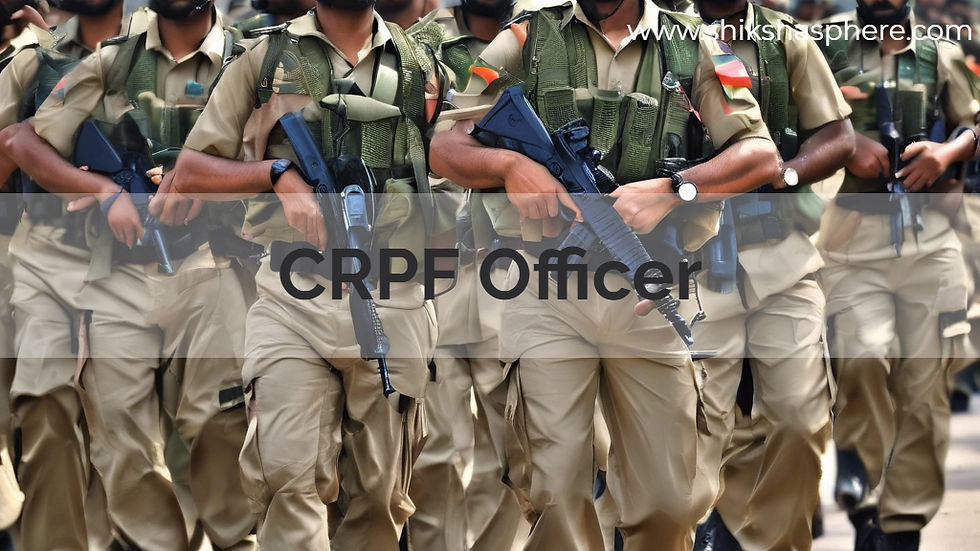
Career Overview of CRPF Officer
The Central Reserve Police Force (CRPF) is one of the largest paramilitary forces in India. It plays a crucial role in maintaining law and order, counter-insurgency operations, and various internal security duties. Here’s an overview of the career path and responsibilities of a CRPF officer.
Roles and Responsibilities
Law Enforcement: Officers are responsible for enforcing laws and maintaining peace in various regions, particularly in areas affected by insurgency or communal violence.
Counter-Insurgency Operations: They lead and participate in operations aimed at combating insurgency and terrorism.
Disaster Management: CRPF officers are trained to manage disaster situations, including natural calamities and civil disturbances.
Security Duties: They provide security to vital installations, VIPs, and during public events.
Training and Leadership: Officers are responsible for training subordinate ranks and leading teams in various operations.
Career Path
Entry-Level: Candidates can join as Sub-Inspectors (SIs) or Assistant Commandants (ACs) through competitive exams conducted by the Union Public Service Commission (UPSC) or Staff Selection Commission (SSC).
Promotions: Officers can rise through the ranks from Assistant Commandant to Deputy Commandant, Commandant, and eventually to higher positions like Inspector General and Director General.
Specializations: Opportunities for specialization in areas such as intelligence, logistics, and training are available, allowing officers to advance their careers further.
Training and Development
Initial Training: New recruits undergo rigorous training at various training academies, focusing on physical fitness, weapon handling, and tactical skills.
Continuous Education: Officers are encouraged to pursue further education and training programs to enhance their skills and knowledge.
Leadership Development: Leadership training is a key component of career advancement, preparing officers for higher responsibilities.
Work Environment
Field Deployment: Officers often work in challenging environments, including remote and conflict-prone areas.
Team Collaboration: The role requires close coordination with other security forces and government agencies.
Shift Work: Officers may be required to work in shifts, including nights and weekends, depending on operational needs.
Conclusion
A career as a CRPF officer is both challenging and rewarding, offering opportunities for personal growth, leadership, and service to the nation. The role demands dedication, resilience, and a commitment to public safety and security.